
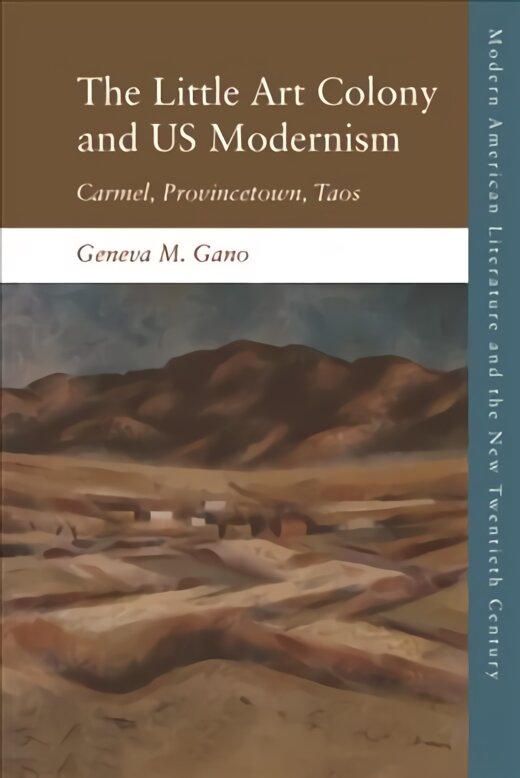


Explores the little art communities and their aesthetic products in the early twentieth centuryHistoricizes and theorizes the role and function of the little art community as a geo-social formationComparative, place-based study of three semiperipheral (non-metropolitan) sites New readings of major authors Jeffers, O’Neill, and LawrenceInterdisciplinary methodology based in primary source analysisChallenges a center-periphery model of modernist activity and literary-aesthetic production and instead emphasizes a network-based, collaborative modelThis book is first to historicise and theorise the significance of the early twentieth-century little art colony as a uniquely modern social formation within a global network of modernist activity and production. Alongside a historical overview of the emergence of three critical sites of modernist activity – the little art colonies of Carmel, Provincetown and Taos – the book offers new critical readings of major authors associated with those places: Robinson Jeffers, Eugene O’Neill and D. H. Lawrence. Geneva M. Gano tracks the radical thought and aesthetic innovation that emerged from these villages, revealing a surprisingly dynamic circulation of persons, objects and ideas between the country and the city and producing modernisms that were cosmopolitan in character yet also site-specific.
This book is first to historicise and theorise the significance of the early twentieth-century little art colony as a uniquely modern social formation within a global network of modernist activity and production.
This book is first to historicise and theorise the significance of the early twentieth-century little art colony as a uniquely modern social formation within a global network of modernist activity and production.
Daugiau prekių iš šios kategorijos
- Significance of Little Art Colonies in Early 20th Century: This book historicizes and theorizes the role of small art communities as modern social formations within a global network of modernist activity.
What is the main focus of the book regarding early twentieth-century little art colonies?
The book historicizes and theorizes the significance of early twentieth-century little art colonies as modern social formations within a global network of modernist activity.


