
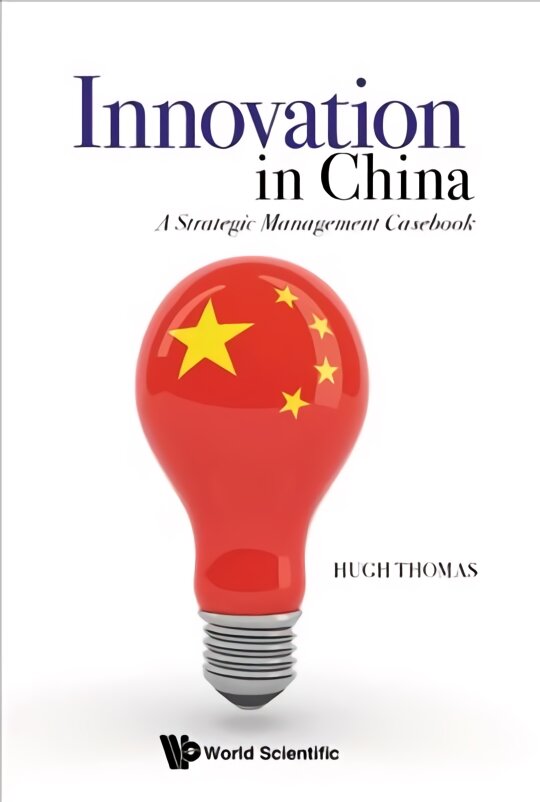


Innovation has shaped society since civilization began. Imperial China was the most innovative society on earth, but it failed to join the 19th century industrial revolution. In the 20th century, the Communist Party of China addressed that failure. Today China boasts an internationally compliant, rapidly developing IP system. State planning continues to be critical as the case of the largest, single, technology acquisition and infrastructure project in world history, high speed rail, demonstrates. But most of the innovation in China comes from the private sector: government incubators are among the government stimuli of private initiative, both local and global. And as the case on Cisco shows, foreign MNCs management of innovation in China is attractive but must involve co-ordination with government policy.This book presents cases where managers determine policy in China’s increasingly innovative society. Readers take the roles of decision-makers to make strategy decisions. The cases in this volume showcase China’s traditional three teachings, socialist market institutions, and modern management using studies on current Chinese companies and their leaders, among them big names such as Haier and Huawei. Each case stands alone as teaching material for instructors. Taken together, the book presents evolving models of innovation. Their subtle differences from western constructs critically impact the development of our global society.
Daugiau prekių iš šios kategorijos
- Historical Context of Innovation in China: China has a long history of innovation, notably during imperial times, but it failed to participate in the 19th-century industrial revolution, a gap that the 20th-century Communist Party sought to address.
What role has the Chinese government played in fostering innovation throughout history?
The Chinese government has historically played a significant role in innovation, especially during the 20th century when the Communist Party of China aimed to address past failures, and continues to influence innovation through state planning and government-supported incubators, particularly in relation to large infrastructure projects like high-speed rail.


